In Brief: Payroll systems contain highly sensitive information, such as Social Security numbers, bank details, and wage records. Data security protects this information from unauthorized access, while privacy controls how it is collected, used, and shared. Common risks include phishing, insider misuse, weak access controls, and insecure vendors. Strong protection requires role-based access, multi-factor authentication, encryption, and regular audits. Organizations must also follow applicable privacy laws and security frameworks when handling payroll data.
What Does Payroll Data Security and Privacy Mean?
Payroll data security and privacy describe two related but distinct disciplines. Security is the collection of technical and administrative safeguards, such as encryption, access controls, and monitoring, that keep payroll records safe from unauthorized access, theft, or corruption. Privacy is the set of principles and legal obligations that govern how organizations collect, use, store, and share that data in the first place.
Direct answer: security asks how payroll data is protected, while privacy asks what data should be collected and why. Both disciplines are necessary because payroll files typically combine several of the most sensitive categories of personal information an employer holds in one place, from government identification numbers to banking details.
Why Does Payroll Data Security Matter?
Direct answer: payroll data security matters because a single payroll record can contain everything a criminal needs to commit identity theft, file a fraudulent tax return, or redirect an employee’s paycheck. Because payroll runs on a recurring schedule and touches every worker in a company, any weakness in the system tends to be discovered quickly, often after money has already moved.
Beyond the immediate financial harm to employees, a payroll data breach can expose an organization to regulatory investigations, breach notification costs, lawsuits, and lasting damage to employee trust. The consequences of ignoring payroll security compound over time, since payroll data rarely goes stale the way other business records do: a stolen Social Security number is still useful to a criminal years after it was taken, which is part of why payroll files are treated as long-term liabilities rather than short-term risks.
What Kinds of Payroll Data Need Protection?
Direct answer: payroll systems typically store far more than a name and a paycheck amount. Protecting payroll data means protecting all of the following categories:
- Full legal names, home addresses, and dates of birth
- Social Security or national identification numbers
- Bank account and routing numbers used for direct deposit
- Wage rates, bonuses, commissions, and deduction details
- Tax withholding forms and filing status
- Benefits enrollment and dependent information
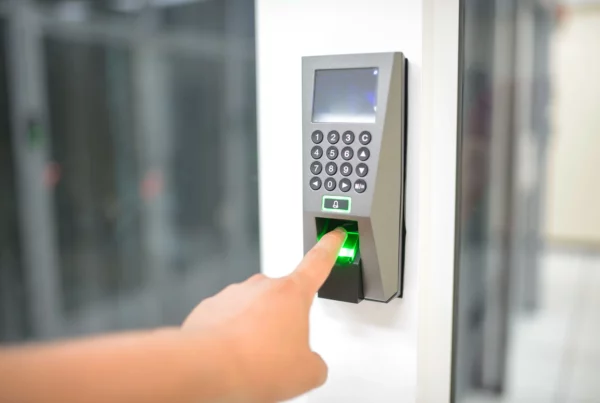
- Biometric identifiers, such as fingerprints or facial scans, used for time and attendance tracking
Because these categories fall under multiple regulatory definitions of sensitive personal information, a breach involving any one of them can trigger notification obligations under applicable law. Many organizations underestimate this list because it grows quietly over time: a time-tracking vendor adds fingerprint scanning, a benefits provider requests dependent birth dates, or a new expense tool captures banking details for reimbursements. Each addition expands the surface area that a security plan needs to cover, which is why a periodic inventory of payroll data is worth treating as a standing task rather than a one-time exercise.
Who Is Responsible for Payroll Data Security?
Direct answer: payroll data security is a shared responsibility across human resources, information technology, finance, leadership, and any outsourced provider, not the job of a single department working alone. Treating it as an IT-only concern tends to leave gaps in policy and training, while treating it as an HR-only concern tends to leave gaps in technical controls.
| Role | Typical Responsibility |
| Human resources | Maintains accurate records, enforces data handling policy, and manages onboarding and offboarding access |
| Information technology | Implements technical controls, monitors systems for suspicious activity, and manages authentication |
| Finance and payroll staff | Verifies transactions, reconciles wage data, and flags unusual changes to bank details or pay rates |
| Leadership | Allocates budget for security tools, sets policy tone, and approves the incident response plan |
| Third-party vendors | Maintain their own contractual safeguards and report incidents to the organization promptly |
Clear ownership matters most during moments of change, such as a new hire, a role change, or an employee’s last day. Without a documented handoff between departments, access reviews are the task most likely to fall through the cracks.
What Are the Biggest Payroll Data Security Risks?
Direct answer: payroll data faces threats from both outside and inside an organization. The table below outlines the most common risk categories and what they typically look like in practice.
| Risk | What It Looks Like |
| Phishing and business email compromise | Fraudulent emails that impersonate an executive or vendor to redirect direct deposit details or request sensitive files |
| Insider misuse | Employees or contractors accessing or altering payroll records beyond what their role requires |
| Weak access controls | Broad, unreviewed permissions that let too many people view or edit sensitive fields |
| Unsecured third-party vendors | Outsourced providers that lack adequate safeguards or clear contractual accountability |
| Ransomware and malware | Malicious software that encrypts or exfiltrates payroll files, disrupting pay cycles and exposing data |
Data minimization is one of the most consistent principles across payroll security guidance: organizations that limit what they collect and how long they keep it also limit what a future breach can expose.
“If you don’t need it, don’t collect it.”
Principle drawn from federal guidance on protecting personal information in business records
What Security Measures Protect Payroll Data?
Direct answer: a layered combination of technical, administrative, and physical controls offers the strongest protection for payroll data. Core measures include:
- Role-based access control that limits payroll visibility to those who genuinely need it
- Multi-factor authentication for every account with payroll access
- Encryption of payroll data both at rest and in transit
- Regular access reviews and prompt deprovisioning when roles change or employees leave
- Routine security audits and periodic penetration testing
- Written vendor agreements that specify security obligations and breach notification timelines
- Ongoing employee training on phishing and social engineering tactics
- A documented incident response plan that is tested before it is needed
A Quick Reference: Layers of Payroll Data Security
The table below summarizes how physical, technical, access, administrative, and governance layers work together to protect payroll data.
| Layer | What It Includes |
| Physical safeguards | Locked server rooms and secure disposal of paper records |
| Technical controls | Encryption, multi-factor authentication, and network monitoring |
| Access management | Role-based permissions and least-privilege reviews |
| Administrative policy | Written security plan, vendor agreements, and training |
| Governance and privacy | Data minimization, retention limits, and legal compliance |
For teams that prefer a walkthrough format, a short explainer video covering role-based access setup and multi-factor authentication is a useful companion to this guide, along with a photo gallery of secure workstation setups for onsite payroll teams.
What Privacy Laws Govern Payroll Data?
Direct answer: payroll privacy is shaped by a patchwork of federal guidance and state law rather than a single nationwide statute. Key frameworks include the following.
| Framework | What It Requires |
| General Data Protection Regulation | Governs how employers in or serving the European Union collect, process, and transfer employee data, with strict consent and minimization rules |
| State consumer and privacy laws | A growing number of states extend data rights and security obligations to employee records, not only customer data |
| Safeguards Rule | Requires covered financial institutions and their service providers to maintain a written information security program |
| Cybersecurity Framework | Offers voluntary but widely adopted guidance for identifying, protecting, detecting, responding to, and recovering from cybersecurity risks, including a profile built specifically for payroll organizations |
| Federal recordkeeping and tax rules | Set retention periods and handling requirements for payroll tax documents and wage records |
How Can Organizations Build a Payroll Data Security Plan?
Direct answer: an effective plan moves through a repeatable sequence rather than a one-time project.
- Map the data. Identify every place payroll information is collected, stored, and transmitted.
- Classify sensitivity. Separate highly sensitive fields, such as bank details and identification numbers, from lower-risk data.
- Apply least-privilege access. Grant permissions based strictly on job function.
- Encrypt and back up. Protect data at rest and in transit, and test backups on a regular schedule.
- Vet vendors. Confirm that any outsourced provider maintains its own written security program.
- Train the team. Repeat awareness training on phishing, social engineering, and data handling at least once a year.
- Prepare to respond. Document and rehearse a breach response plan before an incident occurs.
Treating this sequence as an ongoing cycle, rather than a checklist to complete once, keeps a payroll security plan aligned with new tools, new regulations, and new threats as they emerge.
What Common Mistakes Undermine Payroll Data Security?
Direct answer: most payroll data incidents trace back to a small set of avoidable habits rather than sophisticated attacks. Recognizing these patterns is often the fastest way to close a gap.
- Storing payroll spreadsheets on personal devices, personal email, or unapproved cloud storage
- Sharing login credentials between team members instead of issuing individual accounts
- Delaying access revocation after an employee changes roles or leaves the organization
- Sending sensitive payroll files as unencrypted email attachments
- Skipping a security review before onboarding a new payroll or benefits vendor
- Treating annual training as a formality rather than a practical, scenario-based exercise
- Failing to test a written incident response plan before it is actually needed
None of these mistakes require advanced technology to fix. Most are addressed through clearer policy, consistent enforcement, and a habit of reviewing access and vendor relationships on a regular schedule rather than only after something goes wrong.
Key Points
- Payroll data security protects against unauthorized access, while payroll privacy governs collection, use, and sharing.
- Payroll records combine multiple categories of sensitive data, so a breach in one area often triggers legal notification duties.
- Security responsibility is shared across HR, IT, finance, leadership, and vendors, with the clearest gaps appearing during role changes and offboarding.
- Phishing, insider misuse, weak access controls, unsecured vendors, and ransomware are the leading risk categories.
- Layered defenses, including role-based access, multi-factor authentication, encryption, and audits, reduce exposure.
- Privacy obligations come from a mix of international, state, and federal frameworks rather than one single law.
- A payroll security plan works best as a recurring cycle of mapping, classifying, protecting, training, and rehearsing response.
- Most incidents trace back to avoidable habits, such as shared credentials or delayed access revocation, rather than sophisticated attacks.
References
The following authoritative sources informed this article. Each link leads to the original publication for further reading.
- Federal Trade Commission, “Protecting Personal Information: A Guide for Business”
- Federal Trade Commission, “Data Breach Response: A Guide for Business”
- Federal Trade Commission, “FTC Safeguards Rule: What Your Business Needs to Know”
- National Institute of Standards and Technology, “Cybersecurity Framework Payroll Profile”
- Society for Human Resource Management, “HR’s Role in Protecting Employee Data”