IN BRIEF:
- The Fair Labor Standards Act (FLSA) requires employers to keep accurate records of hours worked and wages paid for all non-exempt employees but does not mandate any specific timekeeping method, leaving the choice of system to the employer.
- The Department of Labor estimates that wage theft, much of it caused by inaccurate timekeeping, costs American workers more than 15 billion dollars per year, making accurate time tracking a legal, financial, and ethical obligation.
- Six main tracking methods exist for most employers: paper timesheets, spreadsheets, badge or card swipe systems, biometric time clocks, mobile apps with GPS, and cloud-based workforce management software.
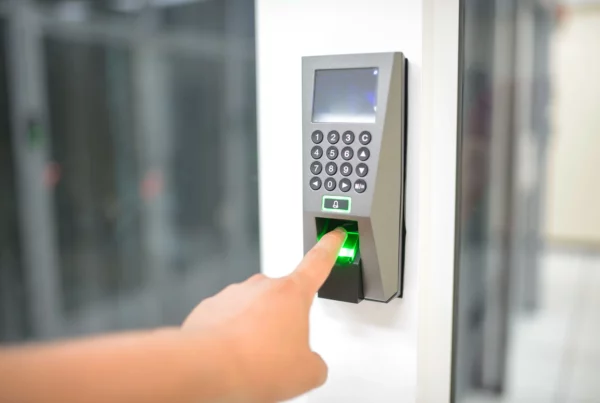
- Biometric time clocks eliminate buddy punching, which is the practice of one employee clocking in for another, a problem that costs US employers an estimated 373 million dollars per year (American Payroll Association).
- FLSA recordkeeping requirements mandate that employers retain payroll records, including time and attendance data, for at least three years and time records for at least two years.
- The best time and attendance system is one that integrates directly with your payroll software, reducing the manual re-entry of hours data that is one of the most common sources of payroll errors.
Why Is Accurate Time and Attendance Tracking Legally Required?
The obligation to track employee time accurately is not optional for most US employers. The Fair Labor Standards Act establishes federal minimum wage and overtime requirements that can only be calculated from accurate time records. Any employer who fails to maintain those records, or who maintains records that undercount actual hours worked, faces liability for unpaid wages, back pay, liquidated damages equal to the unpaid amount, and civil penalties.
What happens when time and attendance records are inaccurate?
- Overtime errors: non-exempt employees who work more than 40 hours in a workweek are entitled to 1.5 times their regular rate for every hour over 40 under the FLSA. If the employer’s timekeeping system undercounts those hours, the underpayment is a wage violation regardless of intent.
- State wage law exposure: most states have their own wage and hour laws that are at least as protective as the FLSA and in many cases more demanding. California, for example, requires overtime after 8 hours in a single workday in addition to the weekly 40-hour federal threshold.
- Back pay liability: employees who can demonstrate they worked more hours than recorded are entitled to recover back pay for up to two years under the FLSA, or three years if the violation is willful.
- Liquidated damages: in most successful FLSA cases, the employer must pay liquidated damages equal to the unpaid wage amount, effectively doubling the total liability.
What Are the Six Main Methods for Tracking Time and Attendance?
The method an employer chooses for tracking time and attendance depends on workforce size, work location, industry, and budget. No single method is right for every employer, but each has a clear use case.
|
Six Time and Attendance Tracking Methods Compared From paper timesheets to cloud software: choose the method that fits your workforce |
|||||||||||
|
| Method | Best For | Key Benefit | Key Limitation |
| Paper timesheets | Very small teams with simple schedules | Zero cost; no technology required | Manual entry errors; easy to falsify; no real-time data |
| Spreadsheet tracking | Small businesses already using office software | Flexible; customizable; low cost | No automation; version control problems; time-consuming for large teams |
| Biometric time clock | Hourly workers; manufacturing; healthcare | Eliminates buddy punching; highly accurate | Higher upfront hardware cost; privacy considerations vary by state |
| Mobile app with GPS | Field workers; construction; delivery | Real-time location verification; works anywhere | Requires employee smartphones; mobile data dependency |
| Badge or card swipe | Office environments; retail; hospitality | Fast to use; integrates with access control systems | Cards can be lost or shared; no biometric verification |
| Cloud-based software with self-service | Remote, hybrid, and distributed teams | Access from any device; integrates directly with payroll | Requires reliable internet; relies on employee honesty for remote entry |
Note: Method selection should account for applicable state biometric privacy laws (Illinois BIPA, Texas, Washington, and others) before deploying fingerprint or facial recognition systems. Consult legal counsel before implementing biometric tracking in any state.
What Does Federal Law Require Employers to Record?
The FLSA does not tell employers how to track time, but it does specify exactly what information must be captured and how long it must be retained. Failure to maintain the required records shifts the burden of proof in wage claims to the employer, which is a significant legal disadvantage.
What specific information must FLSA-covered employers record for non-exempt workers?
- Employee’s full name and Social Security number.
- Address, including zip code.
- Date of birth, if under 19 years old.
- Sex and occupation.
- Time and day of week when each employee’s workweek begins.
- Hours worked each workday and total hours worked each workweek.
- Basis on which wages are paid (for example, hourly rate, weekly salary, or piece rate).
- Regular hourly pay rate for any week when overtime is worked.
- Total daily or weekly straight-time earnings.
- Total overtime earnings for each workweek.
- All additions to or deductions from the employee’s wages.
- Total wages paid each pay period.
- Date of payment and the pay period covered.
How long must time and attendance records be kept?
- Payroll records and collective bargaining agreements: minimum three years under 29 CFR Part 516.
- Time cards, work schedules, order, shipping, and billing records: minimum two years.
- Several states require longer retention periods; always check applicable state law in addition to federal minimums.
What Is Buddy Punching and How Do You Prevent It?
Buddy punching occurs when one employee clocks in or out on behalf of a colleague who is not actually present, inflating the recorded hours and creating fraudulent pay records. The American Payroll Association estimates it costs US employers approximately 373 million dollars per year.
Which timekeeping methods are most effective at preventing buddy punching?
- Biometric time clocks: fingerprint, hand geometry, or facial recognition systems tie clock-in to a unique physical characteristic that cannot be shared or duplicated. These are the most effective anti-buddy-punching technology available.
- Mobile GPS clock-in: requiring employees to clock in through a mobile app that records their GPS location at the moment of entry creates a verifiable record that the employee was at the correct job site.
- Photo capture at clock-in: some time and attendance systems take a photo of the employee at the moment of clock-in and store it with the time record, creating a visual audit trail that supervisors can review.
- Geofencing: cloud-based systems can be configured to only accept clock-in entries from employees within a defined geographic radius of their assigned work location, rejecting entries submitted from outside that boundary.
IMPORTANT: STATE BIOMETRIC PRIVACY LAW COMPLIANCE
- Illinois Biometric Information Privacy Act (BIPA): requires written consent, published retention policy, and prohibits sale of biometric data. Carries a private right of action with statutory damages of 1,000 to 5,000 dollars per violation.
- Texas and Washington: require informed consent before collecting biometric identifiers; prohibit sale without consent.
- Other states: biometric privacy legislation is expanding rapidly. Always confirm current requirements in every state where biometric time clocks will be deployed before implementation.
- Practical step: obtain a signed written consent form from every employee before enrolling them in any biometric time-tracking system, regardless of which state they work in.
How Does Time and Attendance Tracking Connect to Payroll?
Time and attendance data is the primary input into every payroll calculation for hourly and non-exempt employees. The accuracy of that data directly determines whether employees are paid correctly, whether overtime is calculated properly, and whether the employer’s FLSA obligations are met.
What are the most common errors that occur when time and attendance is not integrated with payroll?
- Manual re-entry errors: when hours are recorded in one system and then manually typed into a payroll system, transcription mistakes are inevitable at scale. A single digit error in a timesheet transfer can create an overpayment, underpayment, or overtime miscalculation.
- Rounding errors: the FLSA permits employers to round time entries to the nearest five minutes, one-tenth of an hour, or quarter-hour, provided the rounding policy does not consistently disadvantage employees over time. Manual rounding is far more prone to systematic bias than automated rounding in a connected system.
- Missed overtime flags: when time data is not fed directly into the payroll system in real time, overtime thresholds may not be flagged until after the pay run has been approved, requiring costly corrections.
- Absence and leave reconciliation: paid time off, sick leave, and holiday pay must reconcile with actual attendance records to prevent double-counting or under-payment. Manual reconciliation across separate systems is one of the most time-consuming and error-prone payroll tasks.
HOW INTEGRATED TIME AND ATTENDANCE ELIMINATES THESE ERRORS
- Hours feed directly from the timekeeping system into the payroll calculation engine without manual re-entry.
- Overtime threshold alerts surface in real time during the workweek, allowing managers to intervene before unauthorized overtime accumulates.
- Rounding rules are applied consistently and automatically according to the employer’s defined policy, with an audit trail for every adjustment.
- Approved leave balances deduct automatically from accrual accounts and reconcile against time records without a separate manual step.
How Do You Choose the Right Time and Attendance System?
Choosing a time and attendance system is a decision that will affect every payroll run, every manager’s daily workflow, and your legal defensibility in any future wage claim. The criteria below address the dimensions that matter most for most employers.
What factors should drive the selection decision?
- Workforce type: office workers and remote employees are well served by cloud-based self-service systems; hourly workers in fixed locations benefit from physical time clocks; field workers need mobile GPS solutions.
- Payroll system integration: confirm that the time and attendance system has a native integration with your payroll platform, not just an export-import file transfer. Native integration means real-time data flow and fewer manual steps.
- Buddy punching risk: if buddy punching is a concern in your environment, a biometric system is significantly more effective than card swipe or PIN entry, subject to state privacy law compliance.
- Overtime visibility: the system should surface overtime risk in real time during the workweek, not just after the pay period closes.
- Mobile accessibility: managers should be able to review and approve timesheets from a smartphone without logging into a desktop system.
- Audit trail quality: every clock-in, clock-out, edit, and approval should be logged with a timestamp and the identity of the user who made the change, creating a defensible record for any future wage claim or DOL audit.
Key Points
- FLSA Requires Records: The FLSA requires employers to maintain accurate records of hours worked for all non-exempt employees. No specific tracking method is mandated, but records must be accurate and retained for the required period.
- Retention Periods: Payroll records must be kept for at least 3 years, while time cards and supporting documents must generally be kept for at least 2 years under 29 CFR Part 516. Some states require longer retention periods.
- Wage Theft Scale: The Department of Labor estimates that wage theft costs American workers more than $15 billion per year. Inaccurate timekeeping is one contributing cause.
- Buddy Punching Cost: Buddy punching costs U.S. employers an estimated $373 million per year (APA). Biometric time clocks can help prevent it but require compliance with applicable state laws and consent requirements.
- Overtime Liability: Non-exempt employees are generally entitled to 5× their regular rate for hours worked over 40 in a workweek under the FLSA. Undercounted hours can create back-pay liability and potentially liquidated damages.
- Integration Is Critical: Manual re-entry of time data into payroll can create payroll errors. Integrating time-and-attendance software directly with payroll helps reduce these errors.
- Biometric State Laws: States including Illinois have laws governing the collection and use of biometric information. Employers using biometric time clocks should obtain the required consent and comply with applicable state requirements.
- Real-Time Overtime Alerts: Effective time-and-attendance systems can flag overtime risks during the workweek, allowing managers to address excessive hours before the pay period closes.
External Sources of Authority
All facts, statistics, and legal references in this article are drawn from the following sources. Click each link to access the original publication.
- US Department of Labor, Fair Labor Standards Act Advisor https://www.dol.gov/agencies/whd/flsa : FLSA overtime requirements (1.5x for hours over 40 per week), recordkeeping mandates (29 CFR Part 516), wage and hour enforcement, and back-pay and liquidated damages provisions.
- US Department of Labor, Wage and Hour Division, Recordkeeping Requirementshttps://www.dol.gov/agencies/whd/fact-sheets/21-flsa-recordkeeping : Specific list of information employers must record for non-exempt employees; retention periods (payroll records three years; time records two years).
- American Payroll Association (APA) https://www.americanpayroll.org : Estimate that buddy punching costs US employers approximately 373 million dollars per year; time and attendance compliance best practices.
- US Department of Labor, Wage Theft Statistics https://www.dol.gov : Estimate that wage theft costs American workers more than 15 billion dollars per year, including losses attributable to inaccurate timekeeping.
- Illinois Biometric Information Privacy Act (BIPA), 740 ILCS 14 https://www.ilga.gov : Requirements for written consent, data retention policy, and prohibition on sale of biometric data; statutory damages of 1,000 to 5,000 dollars per violation.
- Society for Human Resource Management (SHRM), Time and Attendance Systems Guide https://www.shrm.org: Workforce management technology benchmarks, integration best practices, and time and attendance system selection criteria.
- Internal Revenue Service (IRS), Employer Tax Guide (Publication 15) https://www.irs.gov : Federal payroll recordkeeping obligations that interact with time and attendance records, including withholding calculations based on hours worked.