IN BRIEF
- An attendance report is a structured record that documents employee presence, absences, tardiness, leave usage, and hours worked over a defined period, typically daily, weekly, or monthly.
- Attendance reports serve three distinct functions: payroll accuracy verification, workforce management and scheduling, and compliance documentation under federal and state wage and hour laws.
- The Fair Labor Standards Act (FLSA) requires employers to maintain accurate records of hours worked for all non-exempt employees. The attendance report is the primary document supporting this obligation.
- Key metrics in a well-designed attendance report include the absenteeism rate, tardiness rate, Bradford Factor, schedule adherence rate, and overtime as a percentage of total hours.
- Attendance data must be handled with data privacy care. Records that capture health-related absences, FMLA leave, or disability accommodations are subject to HIPAA and ADA confidentiality requirements.
- Digital attendance reports generated from time and attendance systems reduce manual error, integrate directly with payroll, and provide real-time visibility into workforce availability.
- Managers who review attendance reports regularly and act on patterns, not just individual incidents, reduce absenteeism, identify disengagement early, and build a culture of attendance accountability.
What Is an Attendance Report and Why Does It Matter?
An attendance report is a structured document or digital output that records employee attendance data for a defined period. At its simplest, it answers three questions for every employee: Were they scheduled to work? Were they present? If not, why not? In practice, a well-designed attendance report goes further, capturing clock-in and clock-out times, total hours worked, overtime, leave type, tardiness events, and cumulative patterns over time.
Attendance reports matter because workforce availability is the foundation of operational delivery. An organization cannot serve customers, meet production targets, or maintain service quality with an unpredictable workforce. For payroll, attendance records are the source data from which compensation for hourly and non-exempt employees is calculated. For compliance, they are the documentary evidence that the employer has met its legal obligation to track and compensate working time accurately.
“An attendance report is not a surveillance document; it is a management tool. Its purpose is not to catch employees doing the wrong thing but to give managers the information they need to make good decisions about scheduling, staffing, and employee support. The organizations that use attendance data most effectively are those that treat patterns as conversations to be had, not violations to be punished.”
The Department of Labor Wage and Hour Division (WHD) requires employers to maintain accurate records of hours worked for all non-exempt employees under 29 CFR Part 516. These records must be retained for at least three years. Source: DOL WHD at dol.gov/agencies/whd/flsa/recordkeeping.
What Are the Different Types of Attendance Reports?
Attendance reports vary by frequency, scope, and purpose. Different stakeholders need different views of the same underlying attendance data. The table below summarizes the most common report types and their primary use cases.
| Report Type | What It Shows | Primary User | Frequency | Key Use Case |
| Daily attendance report | Who was present, absent, late, or on leave each day | Line managers, HR ops | Daily | Same-day absence flagging and coverage decisions |
| Weekly attendance summary | Hours worked, absences, tardiness trends per employee per week | Managers, payroll team | Weekly | Input for weekly payroll runs and scheduling |
| Monthly attendance report | Consolidated attendance metrics per employee for the month | HR, payroll, department heads | Monthly | Monthly payroll processing; leave balance updates |
| Absenteeism report | Absence patterns by employee, department, and period | HR analytics, senior management | Monthly or quarterly | Identifying chronic absence; supporting disciplinary action |
| Tardiness report | Late arrivals and early departures by frequency and duration | Supervisors, HR | Weekly or monthly | Coaching conversations; pattern identification |
| Overtime report | Overtime hours by employee and department | Finance, operations, HR | Weekly or monthly | Payroll cost control; ArG or FLSA compliance tracking |
| Leave balance report | Accrued, used, and remaining leave for each employee | HR, employees | Monthly or on demand | Leave planning; end-of-period carryover decisions |
| FMLA or ADA tracking report (US) | Protected leave usage by employee against entitlement | HR, legal | On demand; quarterly review | Compliance tracking; preventing interference claims |
Tip for HR teams: Most organizations generate attendance reports automatically from their time and attendance platform. However, the most useful reports are not always the ones the system generates by default. Identify the three or four decisions that attendance data needs to support in your organization (scheduling, payroll verification, absence management, compliance) and design reports specifically to answer those questions rather than using generic outputs.
What Information Should an Attendance Report Include?
The specific fields in an attendance report depend on its purpose, but a complete report covering payroll and workforce management needs typically includes the following data elements.
Employee Identification
- Employee full name and employee ID number.
- Department, cost center, and location for multi-site organizations.
- Job title and employment classification (full-time, part-time, hourly, salaried exempt, salaried non-exempt).
- Supervisor or manager name for filtering and escalation purposes.
Attendance Events
- Date of each scheduled workday within the reporting period.
- Scheduled start and end time for each workday.
- Actual clock-in and clock-out time for each workday.
- Total hours worked per day and per period.
- Tardiness: minutes late on each late arrival.
- Early departure: minutes early on each early exit.
- Absence type: present, absent authorized, absent unauthorized, on approved leave, on FMLA or protected leave, public holiday.
Aggregate Calculations
- Total scheduled hours for the period.
- Total actual hours worked for the period.
- Total overtime hours for the period.
- Total absent days (authorized and unauthorized) for the period.
- Total late arrivals and cumulative minutes late for the period.
- Leave balances: accrued, used, and remaining for each leave type.
Period and Comparison Data
- Prior period comparison to identify trends (this month vs last month; this quarter vs same quarter last period).
- Department average for key metrics to contextualize individual performance.
“The most common failure in attendance report design is capturing too much data without surfacing the right insights. A report that shows every clock-in timestamp for 200 employees is technically complete but operationally useless for a manager reviewing it on a Monday morning. Good attendance report design starts with the decision the reader needs to make, then selects the minimum data required to make it.”
What Are the Key Attendance Metrics Every Report Should Track?
Raw attendance data becomes actionable when it is converted into metrics that can be compared against benchmarks, tracked over time, and used to support decisions. The following metrics are the most widely used in workforce attendance management.
| Metric | Formula | What a High Number Signals | Benchmark |
| Absenteeism rate | (Total absent days / Total scheduled days) x 100 | Potential disengagement, health issues, or culture concerns | Under 3% is generally considered healthy |
| Tardiness rate | (Late arrivals / Total scheduled shifts) x 100 | Scheduling friction, commute issues, or engagement problems | Under 5% in most industries |
| Attendance rate | (Days present / Days scheduled) x 100 | High number is positive; measures reliability | Above 95% indicates strong attendance discipline |
| Bradford Factor | S2 x D (S = absence episodes; D = total days absent) | High score flags frequent short absences vs. one long absence | Scores above 45 often trigger review conversations |
| Schedule adherence | (Scheduled hours worked / Total scheduled hours) x 100 | High adherence signals workforce reliability | Above 90% for shift-based teams |
| Overtime as % of total hours | (Overtime hours / Total hours worked) x 100 | High number signals potential understaffing or workload issues | Under 10% for sustainable operations |
What Is the Bradford Factor and How Is It Calculated?
The Bradford Factor is a formula used to identify frequent short absences, which are more disruptive to operations than single longer absences. The formula is: Bradford Factor Score = S squared x D, where S is the number of separate absence episodes in the period and D is the total number of days absent.
- An employee with one absence of 5 days: 1 x 1 x 5 = Bradford Score of 5 (low impact).
- An employee with 5 separate absences of 1 day each: 5 x 5 x 5 = Bradford Score of 125 (high impact).
- Both employees were absent for the same total days, but the frequent absence pattern creates much more operational disruption.
- The Bradford Factor is a useful conversation starter, not a disciplinary tool by itself. High scores warrant a supportive discussion about underlying causes, not automatic escalation.
The Bradford Factor formula was developed at the University of Bradford and is widely used in HR attendance management. It is most effective for identifying patterns of short-term intermittent absence in hourly and shift-based workforces. Source: CIPD (Chartered Institute of Personnel and Development) at cipd.org/uk/knowledge/factsheets/absence-factsheet.
What Are the Legal Requirements for Attendance Recordkeeping?
Attendance recordkeeping is not merely a best practice in the United States. It is a legal obligation under federal and, in many cases, state law.
FLSA Federal Recordkeeping Requirements
- The Fair Labor Standards Act requires employers to keep accurate records of hours worked each day and each workweek for all non-exempt employees.
- The law does not mandate a specific timekeeping method or form but requires that records be accurate, complete, and retained for the required period.
- Payroll records must be retained for at least three years. Records on which wage computations are based, including time cards and schedules, must be retained for at least two years.
- Inaccurate or missing time records expose the employer to back wage claims, liquidated damages, and civil money penalties in a DOL Wage and Hour Division investigation.
FMLA Recordkeeping Requirements
- The Family and Medical Leave Act (FMLA) requires employers covered by the Act to maintain records of FMLA-related leave taken by eligible employees.
- FMLA records must be kept for at least three years and must include dates of FMLA leave taken, records of notices, medical certifications, and premium payments for health benefits.
- FMLA records must be kept confidential and stored separately from general personnel files to comply with FMLA and ADA confidentiality requirements.
ADA and Health Information Confidentiality
- Attendance records that reflect disability-related absences or accommodations are subject to ADA confidentiality requirements. They must be stored separately from general attendance and personnel files.
- Managers should not have access to the medical reason for a leave absence, only to the fact of the leave and its approved duration.
- Records indicating medical reasons for absence should be handled by HR, not by line managers, and stored in the employee’s confidential medical file rather than their general personnel file.
Legal note: Several states have their own attendance and leave recordkeeping requirements that exceed federal minimums. California, New York, and Illinois, in particular, have detailed requirements for maintaining records of paid sick leave accrual and usage. Always verify current state requirements alongside federal obligations.
FLSA recordkeeping requirements are codified in 29 CFR Part 516. FMLA recordkeeping requirements are in 29 CFR Part 825 Subpart G. Source: Department of Labor at dol.gov/agencies/whd.
How Is an Attendance Report Generated and Distributed?
The generation process depends on the time and attendance system in use. Understanding the data flow from clock-in to report is important for ensuring report accuracy and timeliness.
Digital Attendance Report Generation
- Time and attendance platforms capture clock-in and clock-out data in real time, categorize each event against the employee’s scheduled shift, and automatically calculate hours worked, tardiness, and absence status.
- Reports are generated on scheduled or on-demand runs, pulling from the live database to ensure accuracy through the end of the reporting period.
- Integration with the payroll system allows attendance report data to flow directly into payroll calculations without manual re-entry, eliminating transcription errors.
- Most platforms allow reports to be exported in multiple formats including PDF for distribution, CSV for further analysis, and direct API feeds for connected HR and payroll systems.
Manual Attendance Report Generation
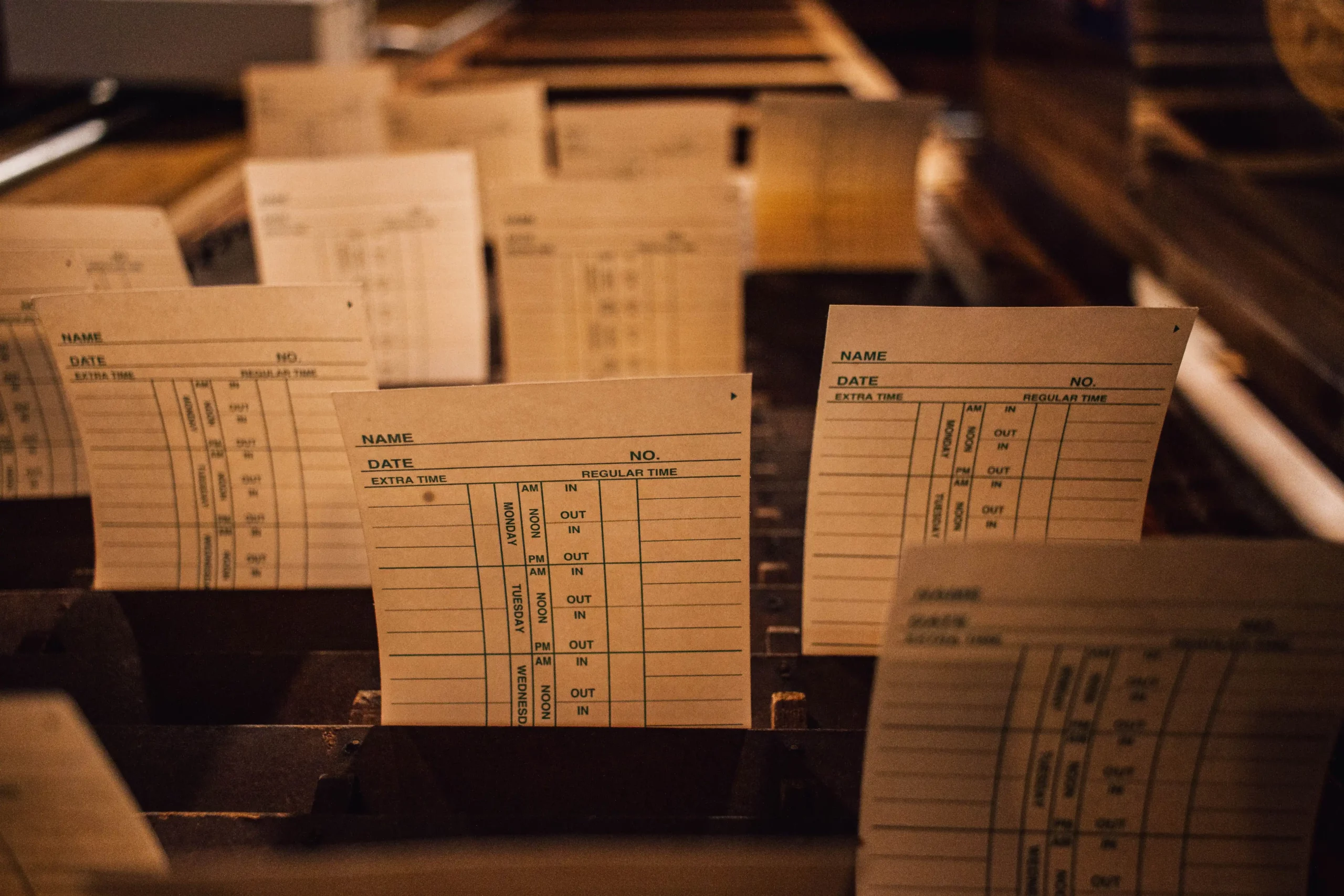
- For organizations still relying on manual timesheets, the attendance report is compiled by HR or payroll staff by aggregating paper or spreadsheet records submitted by employees and approved by supervisors.
- Manual compilation introduces significant risk of transcription error, delayed reporting, and inconsistent categorization of absence types.
- The DOL has confirmed in Wage and Hour Division guidance that employers bear the burden of maintaining accurate records even when using manual systems. An employee’s estimate of hours worked is presumed correct if the employer cannot produce contradicting records.
Distribution and Access Control
- Attendance reports for individual employees should be accessible to the employee, their immediate supervisor, and HR.
- Aggregated department or organization-level reports are appropriate for senior managers and operations leadership.
- FMLA and medical absence data should be restricted to HR personnel only and not included in reports distributed to line managers.
How Should Managers Use Attendance Reports Effectively?
An attendance report is only as useful as the action it prompts. Managers who receive reports but do not review them, act on patterns, or follow up with employees are missing the primary value of attendance tracking.
Building a Regular Review Habit
- Review daily attendance reports at the start of each day to identify unplanned absences and make real-time coverage decisions.
- Review weekly summaries every Monday morning to identify employees who accumulated significant tardiness, overtime, or absences in the prior week.
- Review monthly reports at the end of each month to identify employees whose attendance metrics are moving in a negative direction before patterns become entrenched.
Acting on Patterns, Not Just Incidents
- A single absence is rarely significant. Three absences in six weeks, each on a Monday, is a pattern worth discussing.
- Attendance management conversations should be supportive and curious before they are corrective. The most common causes of attendance problems (childcare issues, commuting difficulties, health conditions, disengagement) are addressable with the right support.
- Use the Bradford Factor and absenteeism rate trends to identify employees who need support conversations, not to build disciplinary cases.
Connecting Attendance Data to Payroll
- Before each payroll run, cross-reference the attendance report against the time data being processed to verify that hours worked, overtime, and leave usage are correctly reflected.
- Attendance data discrepancies discovered after payroll has been processed require corrected payroll runs, which are more costly and administratively burdensome than pre-run verification.
- For FMLA leave, verify that the leave recorded in the attendance system matches the approved leave documentation in the employee’s confidential file before processing payroll.
“The best use of an attendance report is to start a conversation, not to end one. When a manager sees a troubling pattern, the report is the beginning of an inquiry, not the conclusion of a case. The managers who use attendance data most effectively are those who treat it as a signal that an employee may need support, not as evidence to be used against them.”
What Data Privacy Rules Apply to Attendance Records?
Attendance records are personal data subject to applicable privacy laws. The specific obligations depend on the jurisdiction and the nature of the data captured.
US Privacy Obligations
- HIPAA: attendance records reflecting medical absences, diagnoses, or treatment information must be treated as protected health information if they are part of an employer’s group health plan administration. Keep medical absence records separate from general attendance records.
- ADA: disability-related absence and accommodation records must be kept confidential and stored separately from general personnel records. Managers should not have access to the medical reason for an ADA-covered absence.
- FMLA: records of FMLA leave must be kept confidential and retained for three years.
EU and International Privacy Obligations
- Under GDPR, attendance records are personal data subject to the principles of lawful processing, data minimization, and purpose limitation. Employees have rights to access their own attendance data.
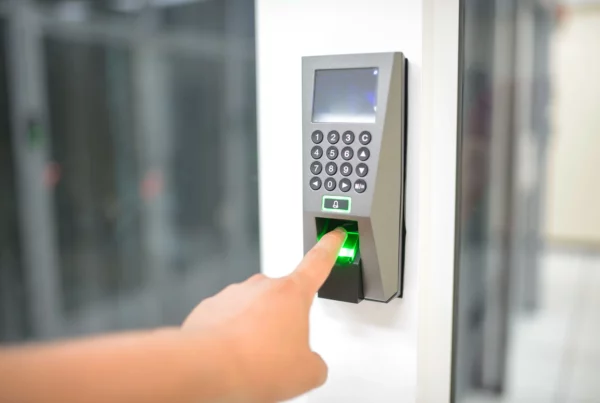
- Biometric attendance data (fingerprint, facial recognition clock-in) is special category data under GDPR, requiring explicit consent and a Data Protection Impact Assessment.
- Cross-border transfer of attendance data for global workforce reporting must comply with GDPR transfer mechanisms where EU employee data is involved.
External References
All regulatory, statutory, and compliance content cited in this article is sourced from the following authoritative references:
Federal Labor and Wage Authorities
- DOL Wage and Hour Division: FLSA employer guide: https://www.dol.gov/agencies/whd/flsa
- DOL: FMLA employer guide and recordkeeping requirements: https://www.dol.gov/agencies/whd/fmla
- DOL: FMLA recordkeeping regulations (29 CFR Part 825): https://www.ecfr.gov/current/title-29/subtitle-B/chapter-V/subchapter-B/part-825
- Bureau of Labor Statistics: employee absence rates by industry: https://www.bls.gov/news.release/atus.toc.htm
ADA, HIPAA, and Employee Privacy
- EEOC: ADA medical record confidentiality (29 CFR Part 1630): https://www.eeoc.gov/disability-discrimination
HR Practice and Attendance Management
- CIPD: absence management factsheet and Bradford Factor guidance: https://www.cipd.org/uk/knowledge/factsheets/absence-factsheet/
- American Payroll Association: timekeeping and payroll compliance resources: https://www.americanpayroll.org
Key Points
- An attendance report documents employee presence, absences, tardiness, overtime, and leave usage over a defined period. It serves payroll accuracy, workforce management, and legal compliance functions simultaneously.
- The FLSA requires employers to keep accurate records of hours worked for all non-exempt employees. Payroll records must be retained for at least three years; time computation records for at least two years.
- Key attendance metrics include the absenteeism rate, tardiness rate, Bradford Factor, schedule adherence rate, and overtime as a percentage of total hours worked.
- The Bradford Factor (S squared x D) identifies frequent short absence patterns that are more operationally disruptive than single longer absences, even when total days absent are equal.
- Digital attendance systems that integrate with payroll eliminate manual re-entry errors and allow pre-run verification of attendance data before each payroll cycle.
- FMLA leave records must be kept confidential, stored separately from general personnel files, and retained for at least three years under 29 CFR Part 825.
- ADA and HIPAA confidentiality requirements prohibit managers from accessing the medical reason for an absence. Only the approved leave duration should be visible at the manager level.
- Attendance reports should be reviewed daily (for coverage planning), weekly (for pattern identification), and monthly (for trend analysis and payroll verification).
- The Bradford Factor is a conversation-starting tool, not a disciplinary instrument. High scores should prompt supportive inquiry into root causes before any corrective action is considered.
- Under GDPR, attendance records are personal data subject to data minimization, purpose limitation, and employee access rights. Biometric clock-in data is special category data requiring explicit consent and a Data Protection Impact Assessment.