IN BRIEF
- Time tracking systems range from paper timesheets and swipe cards to GPS mobile apps and biometric systems including fingerprint scanners, facial recognition, and retinal scans.
- Accuracy, cost, ease of use, and privacy risk vary significantly across systems. The right choice depends on workforce type, industry, and the legal environment in your state or jurisdiction.
- Biometric time tracking offers the highest accuracy and eliminates buddy punching, where one employee clocks in on behalf of another, but it generates the most significant privacy and regulatory compliance obligations.
- Illinois, Texas, and Washington have enacted state biometric privacy laws with substantial penalties. Under GDPR, biometric data is classified as ‘special category’ data requiring explicit consent and a Data Protection Impact Assessment.
- The Fair Labor Standards Act (FLSA) requires employers to maintain accurate records of hours worked for non-exempt employees. Any time tracking method is legally acceptable as long as it produces accurate records.
- GPS-based mobile time tracking is the fastest-growing method for field and deskless workers, combining clock-in convenience with location verification and eliminating paper-based processes.
- Computer activity tracking is the most controversial method for remote workers. While technically precise, it collects extensive behavioral data and faces increasing legal scrutiny as a form of employee surveillance.
Why Does the Choice of Time Tracking System Matter?
Time tracking is not merely an administrative function. It is the foundation of payroll accuracy, labor cost management, compliance with federal and state wage and hour law, and employee trust. An inaccurate or inconsistently applied time tracking method creates downstream errors that compound across every payroll cycle: incorrect pay, disputed overtime calculations, missed meal break penalties, and inaccurate labor cost reporting.
The stakes are highest for non-exempt hourly employees covered by the Fair Labor Standards Act, where the employer must maintain accurate records of all hours worked and pay overtime for any hours over 40 per week. Time tracking errors for non-exempt workers carry direct financial liability. For exempt salaried employees, the legal requirement is less prescriptive, but accurate time data still informs scheduling, project management, and workforce planning decisions.
“Time tracking accuracy is payroll accuracy. Every minute of under-recorded time is a potential wage theft claim. Every minute of over-recorded time is lost payroll efficiency. The method an employer chooses to track time is not a technology preference; it is a compliance decision with real financial and legal consequences.”
The Department of Labor Wage and Hour Division (WHD) investigates employer compliance with FLSA timekeeping requirements. Employers found to have inaccurate or missing time records can be held liable for back wages, liquidated damages equal to the back wage amount, and civil money penalties. Source: DOL WHD at dol.gov/agencies/whd/flsa.
What Are the Main Types of Time Tracking and How Do They Compare?
The time tracking landscape spans from simple paper forms to sophisticated biometric systems. The table below compares the ten most common methods across the dimensions most relevant to employer decision-making.
| Method | How It Works | Best For | Accuracy | Privacy Risk | Cost |
| Manual timesheets (paper) | Employees write hours on paper forms; supervisor signs off | Very small businesses; no tech infrastructure | Low; prone to estimation and rounding | Minimal | Lowest |
| Spreadsheet timesheets | Employees log hours in shared spreadsheets or emailed forms | Small teams; remote workers with basic needs | Low to medium; manual entry errors common | Low | Very low |
| Swipe card / magnetic badge | Employee swipes card at reader on entry and exit | Offices, factories, retail | Medium; buddy punching possible | Low | Low to medium |
| PIN-based clock-in | Employee enters personal PIN at a shared terminal | Manufacturing, warehouses, hospitality | Medium; shared terminal risk | Low to medium | Low |
| Mobile GPS time tracking | Employee clocks in via smartphone app with location stamp | Field workers, construction, deliveries | High; GPS verifies location | Medium; location data collected | Low to medium |
| Biometric fingerprint | Finger scan identifies employee at clock-in/out | Factories, healthcare, logistics; anti-buddy-punch priority | Very high; unique to individual | High; biometric data stored | Medium to high |
| Biometric facial recognition | Camera identifies face at entry/clock-in | High-security facilities; deskless workers | Very high | Very high; image data captured | High |
| Retinal / iris scan | Eye pattern scanned at secure entry points | High-security and government facilities | Extremely high | Very high | Very high |
| RFID / proximity card | Card held near reader; no swipe needed | Offices, hospitals, multi-site operations | Medium to high; card can be shared | Low to medium | Medium |
| Computer activity tracking | Software logs login, active windows, and keystrokes | Remote knowledge workers; project billing | High for computer work; not for physical presence | Very high; invasive monitoring | Low to medium |
Key finding: No single method is universally best. Manual methods cost less upfront but generate the most administrative overhead and the highest error rate. Biometric methods provide the greatest accuracy and fraud prevention but create the most significant privacy compliance obligations and the highest implementation cost. Most employers with mixed workforces use a combination of methods by role type.
What Is Biometric Time Tracking and How Does It Work?
Biometric time tracking uses unique physical or behavioral characteristics of an individual to verify their identity at clock-in and clock-out. Unlike a swipe card or PIN that can be shared or used by another person, biometric identifiers are inherently personal and non-transferable, making them the most tamper-resistant form of employee time verification available.
What Types of Biometric Identifiers Are Used in Time Tracking?
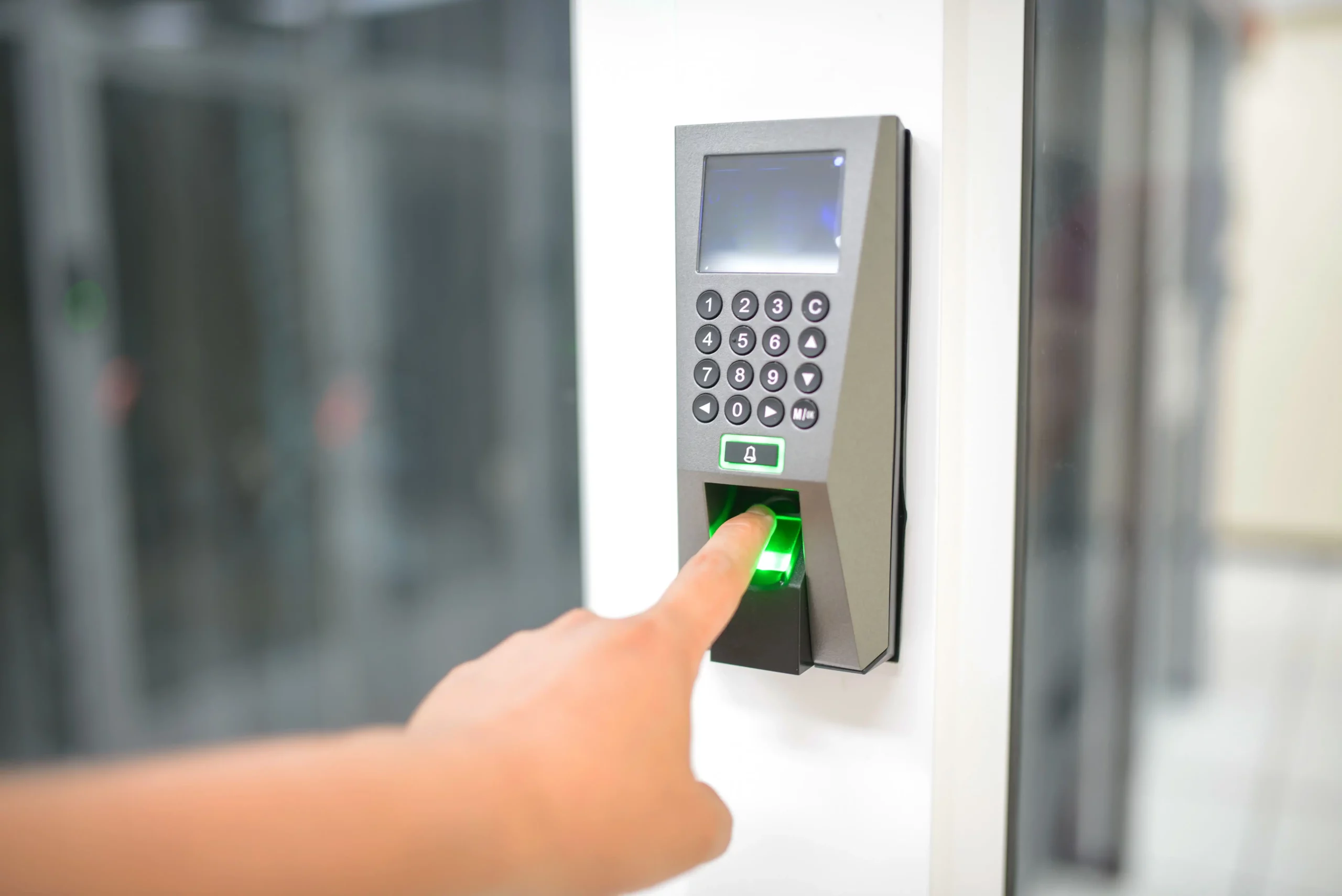
- Fingerprint recognition: the most widely deployed biometric method in commercial time tracking. A scanner captures the ridgeline pattern of a fingertip and compares it to an enrolled template stored in the system. Modern capacitive sensors work in under one second.
- Facial recognition: a camera captures facial geometry, including the distance between facial landmarks, and matches it against an enrolled image. Can operate hands-free and at a distance, making it well-suited to high-throughput entry points.
- Hand geometry: measures the shape, size, and length of the hand. Less common than fingerprint but historically used in healthcare and clean-room environments where gloves complicate fingerprint scanning.
- Iris / retinal scanning: captures the unique pattern of the iris or retinal blood vessel map. Highest accuracy of any biometric method but also the most expensive and least used in standard commercial time tracking.
- Voice recognition: used in remote or telephone-based clock-in systems. Less accurate than physical biometrics and more susceptible to environmental interference.
What Is Buddy Punching and How Does Biometric Tracking Eliminate It?
- Buddy punching occurs when one employee clocks in or out on behalf of another who is absent, late, or leaving early. It is one of the most common forms of time fraud in hourly and shift-based workforces.
- The American Payroll Association estimates that buddy punching costs US employers billions of dollars annually in inflated wage payments.
- Biometric time tracking eliminates buddy punching by requiring the physical presence of the specific individual to authenticate the clock record. No card, PIN, or credential can be borrowed.
“Biometric time tracking solves the fundamental trust problem that haunts every other identification-based clock-in method. A swipe card proves the card is present. A PIN proves the PIN is known. A fingerprint or face proves the person is there. For employers managing large hourly workforces where time fraud is a known cost, the accuracy argument for biometrics is compelling. The compliance argument, however, requires equal attention.”
The American Payroll Association estimates that buddy punching costs US businesses approximately USD 373 million per year in fraudulent time payments. Source: American Payroll Association at americanpayroll.org.
What Are the Privacy Laws That Govern Biometric Time Tracking?
Biometric data is legally classified as sensitive personal data in an increasing number of jurisdictions. Unlike a name or an address, a fingerprint or facial geometry cannot be changed if it is compromised in a data breach. The irreversibility of biometric data is the primary reason legislatures have enacted specific protections.
| Jurisdiction | Key Biometric Law | Employer Obligation | Penalty for Violation |
| Illinois (US) | Biometric Information Privacy Act (BIPA) | Written consent before collection; retention policy; destruction schedule | USD 1,000 to USD 5,000 per violation; private right of action |
| Texas (US) | Capture or Use of Biometric Identifier Act (CUBI) | Informed consent; no sale of biometric data | Attorney General enforcement; up to USD 25,000 per violation |
| Washington (US) | My Health MY Data Act (partial biometric coverage) | Consent; data minimization | Attorney General and private action |
| European Union | GDPR (biometric data is ‘special category’) | Explicit consent or legal necessity; DPIA required; DPA notification | Up to EUR 20 million or 4% of global annual revenue |
| California (US) | CCPA / CPRA (biometric covered as sensitive data) | Disclosure; opt-out rights for sale; limit use right | USD 100 to USD 750 per consumer per incident |
| New York City (US) | Local Law 144 (limited to AI hiring tools; broader bills pending) | Bias audit for AI-based biometric hiring tools | USD 500 to USD 1,500 per violation |
What Are the Core Employer Obligations Under Biometric Privacy Laws?
- Written informed consent: most biometric privacy laws require that employers obtain written consent from employees before collecting any biometric identifier. Consent must be specific, voluntary, and obtained before the first scan.
- Written retention policy: employers must have a publicly available policy specifying how long biometric data is retained and the criteria for destruction. Illinois BIPA, for example, requires destruction within three years of collection or within one year of the employment relationship ending, whichever is first.
- Prohibition on sale or profit: biometric data collected for time tracking cannot be sold, leased, or traded for commercial advantage.
- Security standards: biometric data must be stored with the same level of security as other sensitive personal information, using encryption at rest and in transit.
- Data breach notification: if a biometric data breach occurs, employers may face obligations under both the biometric-specific law and any applicable general data breach notification law.
How Accurate Is Each Time Tracking Systems?
Accuracy in time tracking has two dimensions: the precision with which the method records when an employee clocks in and out, and the degree to which the record reflects the actual employee rather than a substitute or fabricated entry. Different methods perform differently on each dimension.
Precision Accuracy
- Paper timesheets are the least precise. Employees often round to the nearest quarter-hour or estimate start and end times based on memory. Studies on manual timekeeping consistently find rounding errors averaging 5 to 15 minutes per day per employee.
- Electronic swipe card and PIN systems record clock-in and clock-out to the minute, providing high timestamp precision. The limitation is identity verification, not timestamp accuracy.
- GPS mobile apps record location and time simultaneously, providing high precision for both dimensions. GPS accuracy is typically within 5 to 15 meters, which is sufficient to verify a field location but insufficient to verify a specific workstation.
- Biometric systems provide the highest combined accuracy: timestamp precision to the second and definitive identity verification. False acceptance rates for modern fingerprint and facial recognition systems are extremely low.
Identity Accuracy and Fraud Prevention
- Paper and spreadsheet timesheets: no identity verification; fully reliant on employee honesty and supervisor review.
- Swipe cards and RFID: card can be borrowed, forgotten, or shared; no guarantee the cardholder is the person clocking in.
- PIN systems: PIN can be shared or observed; buddy punching is possible.
- GPS apps: location can be spoofed by software on a sophisticated device, though this requires deliberate effort and technical knowledge.
- Biometric systems: identity verification is the core function; the biometric cannot be shared or borrowed.
What Are the FLSA Requirements for Time Tracking?
The Fair Labor Standards Act does not mandate a specific time tracking method. It requires that employers maintain accurate records of the hours worked each day and each workweek for all non-exempt employees. The method is the employer’s choice; the accuracy and completeness of the records are the legal standard.
What Records Are Required?
- Employee’s full name and Social Security number.
- Home address, including ZIP code.
- Date of birth if under 19.
- Sex and occupation.
- Time and day of the start of the employee’s workweek.
- Hours worked each day and total hours worked each workweek.
- Basis on which wages are paid (hourly rate, weekly salary, piece rate).
- Regular hourly pay rate.
- Total daily or weekly straight-time earnings.
- Total overtime earnings for the workweek.
- All additions to or deductions from the employee’s wages.
- Total wages paid each pay period.
- Date of payment and the pay period covered by each payment.
How Long Must Time Records Be Retained?
- FLSA requires payroll records to be kept for at least three years.
- Records on which wage computations are based (time cards, schedules, work and time schedules, records of additions or deductions) must be kept for at least two years.
- Several states require longer retention periods; always apply the longer of the federal and state requirement.
The FLSA recordkeeping requirements are detailed in 29 CFR Part 516. Employers are not required to use any particular form or system for maintaining required records. Source: Department of Labor at dol.gov/agencies/whd/flsa/recordkeeping.
How Should Employers Choose Between Time Tracking Systems?
Choosing a time tracking method is a multivariable decision. The method that is optimal for a manufacturing plant with 500 hourly workers is not the same as the optimal method for a 10-person professional services firm billing clients by the hour.
Decision Framework by Workforce Type
- Deskless and field workers (construction, delivery, home health, utilities): GPS mobile time tracking is the best fit. Employees have smartphones; location verification adds value; paper processes are impractical.
- Shift-based hourly workers in fixed locations (manufacturing, retail, hospitality): biometric fingerprint or facial recognition eliminates buddy punching and integrates directly with payroll systems. The investment in compliance (consent, retention policy) is justified by the fraud prevention value.
- Office-based hourly workers: swipe card, RFID, or PIN systems are typically sufficient. Buddy punching is less prevalent in office environments with visible supervision.
- Remote knowledge workers billed by project or time: software-based time tracking with project allocation is the standard. Computer activity monitoring is an option but requires disclosure and carries significant employee relations risk.
- Healthcare workers with regulated break and overtime requirements: biometric or swipe systems integrated with scheduling software reduce compliance risk in jurisdictions with strict meal break rules.
What Questions Should Drive the Selection Decision?
- Is buddy punching a material cost in our workforce? If yes, biometric is the only method that fully addresses it.
- Are our employees deskless or field-based? If yes, GPS mobile is the most practical option.
- Do we operate in a state with biometric privacy laws? If yes, biometric implementation requires consent, policy, and legal review before deployment.
- What is our budget for hardware, software, and integration? Biometric and GPS systems carry higher upfront and ongoing costs than card or PIN systems.
- What are our payroll integration requirements? The time tracking system should export data in a format compatible with the payroll system without manual re-entry.
External References
All regulatory, statutory, and compliance content cited in this article is sourced from the following authoritative references:
Federal Labor and Wage Authorities
- Department of Labor: FLSA overtime and hours worked guidance: https://www.dol.gov/agencies/whd/flsa
- DOL: 29 CFR Part 516 – FLSA recordkeeping regulations: https://www.ecfr.gov/current/title-29/subtitle-B/chapter-V/subchapter-B/part-516
- American Payroll Association: payroll compliance and timekeeping resources: https://www.americanpayroll.org
Biometric Technology and Standards
- NIST: biometric technology testing and accuracy standards: https://www.nist.gov/programs-projects/biometrics
- NIST: facial recognition vendor testing (FRVT): https://pages.nist.gov/frvt/html/frvt11.html
Biometric Privacy Laws
- Texas CUBI: Capture or Use of Biometric Identifier Act: https://statutes.capitol.texas.gov/Docs/BC/htm/BC.503.htm
- California CPRA: biometric data as sensitive personal information: https://cppa.ca.gov/regulations/
- EU GDPR: biometric data as special category (Article 9): https://eur-lex.europa.eu/eli/reg/2016/679/oj
- European Data Protection Board: biometric data guidance: https://edpb.europa.eu/our-work-tools/general-guidance/guidelines-recommendations-best-practices_en
Key Points
- Time tracking methods range from paper timesheets to biometric fingerprint and facial recognition. The right choice depends on workforce type, industry, budget, and the applicable legal environment.
- Biometric time tracking eliminates buddy punching, where one employee clocks in for another, by requiring the physical presence of the specific individual to authenticate any clock record.
- The American Payroll Association estimates buddy punching costs US employers approximately USD 373 million annually. For large hourly workforces, biometric tracking’s fraud prevention value often justifies its higher implementation cost.
- Illinois BIPA, Texas CUBI, and Washington’s biometric laws require written consent before collecting any biometric identifier. Violations can result in USD 1,000 to USD 5,000 per person per violation under BIPA, with class action exposure.
- Under GDPR, biometric data is classified as ‘special category’ data requiring explicit consent or a specific legal necessity; a Data Protection Impact Assessment is mandatory before deployment.
- The FLSA does not mandate a specific time tracking method but requires accurate records of all hours worked each day and each workweek for all non-exempt employees, retained for at least three years.
- GPS mobile time tracking is the fastest-growing method for field and deskless workers, combining clock-in convenience with location verification and eliminating the need for fixed hardware at dispersed work sites.
- Computer activity tracking is technically accurate for remote knowledge workers but is the most privacy-invasive method and requires explicit disclosure, increasing employee relations risk and potential legal exposure.
- Paper timesheets and manual entry systems have the highest error rates, typically 5 to 15 minutes of daily rounding errors per employee, which compound into significant payroll inaccuracy over time.
- Before deploying any biometric time tracking system, employers must: obtain written consent from every enrolled employee, establish a written retention and destruction policy, ensure secure storage, and consult legal counsel in any state with applicable biometric law.